Denver adults trade screens for Catan to cure the modern isolation
A bimonthly meetup has grown to over 40 players who cite remote work and lost community rituals as the primary drivers of adult loneliness.
By Lorenzo Patterson ·
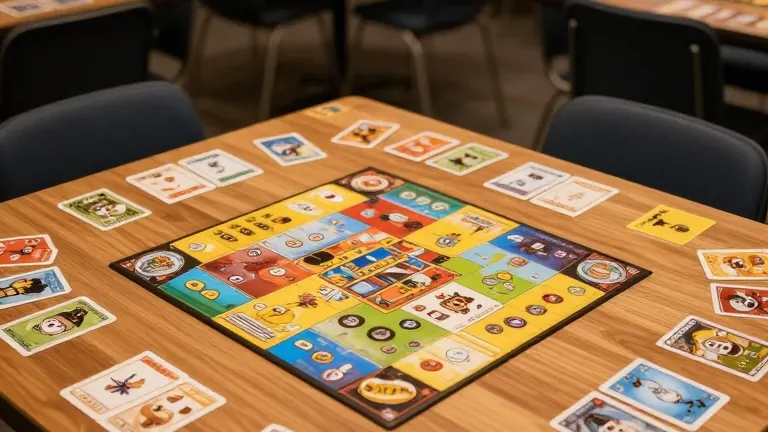
For Matt Martinez, the transition from hosting three guests at his home to managing a crowd of more than 40 at a local venue was not part of the plan. The Denver resident started Board Game Social as a simple way to find opponents for his hobby. He did not anticipate the scale of the response. Speaking during a session of Catan, Martinez expressed surprise at the turnout, noting that he usually struggled to fill a table at home. The group now meets twice a month, providing a structured environment for adults to interact face to face.
The meetup takes place at the Town Hall Collaborative in Denver. It is open to participants aged 21 and older. The event is one of more than 900 board game Meetup groups established across the United States. These organizations have spread to major cities including Washington, D.C., Los Angeles, and New York City. The rise in these groups reflects a wider trend of adults seeking to reduce screen time and rebuild local community ties through in-person activities.
Participants describe the games as a practical solution to the difficulty of starting conversations with strangers. Jim Abajian, a regular attendee, played a loud round of Taboo with a group nearby. In that game, teams compete to guess words without using forbidden terms. Abajian said the shared activity removes the pressure to find interesting topics. He stated that socializing in general is hard nowadays and that having a common game to play makes it easier to build connections.
Eric Duvic, another player at the venue, pointed to the structure of modern work as a root cause of the isolation. He blamed working remotely for eliminating the natural social interactions of the office. Duvic noted that without a workplace or a school, adults lose the standard venues for friendship. He asked what else people have in common to do with others if those daily structures are gone.
Jude Aiello, a retired social worker, offered a historical perspective on the shift. She recalled a time when community dances allowed people to see the same neighbors regularly. She said those rituals no longer exist for many adults. Aiello described the change as profound, noting that she is older and finds it harder to meet people in the current social climate.
The group’s format encourages ongoing engagement beyond the initial game. Martinez, the co-founder, said that sitting around a table for a long enough period helps players identify common interests. He observed that these connections often lead to participants meeting up for other activities outside of the scheduled game nights.