NHL Explores Hawk-Eye Technology to Better Monitor Goaltender Workloads
Advanced optical tracking systems are being used to quantify the complex movements of NHL goalies, offering new insights into player workload and injury prevention.
By Nikolai Morales ·
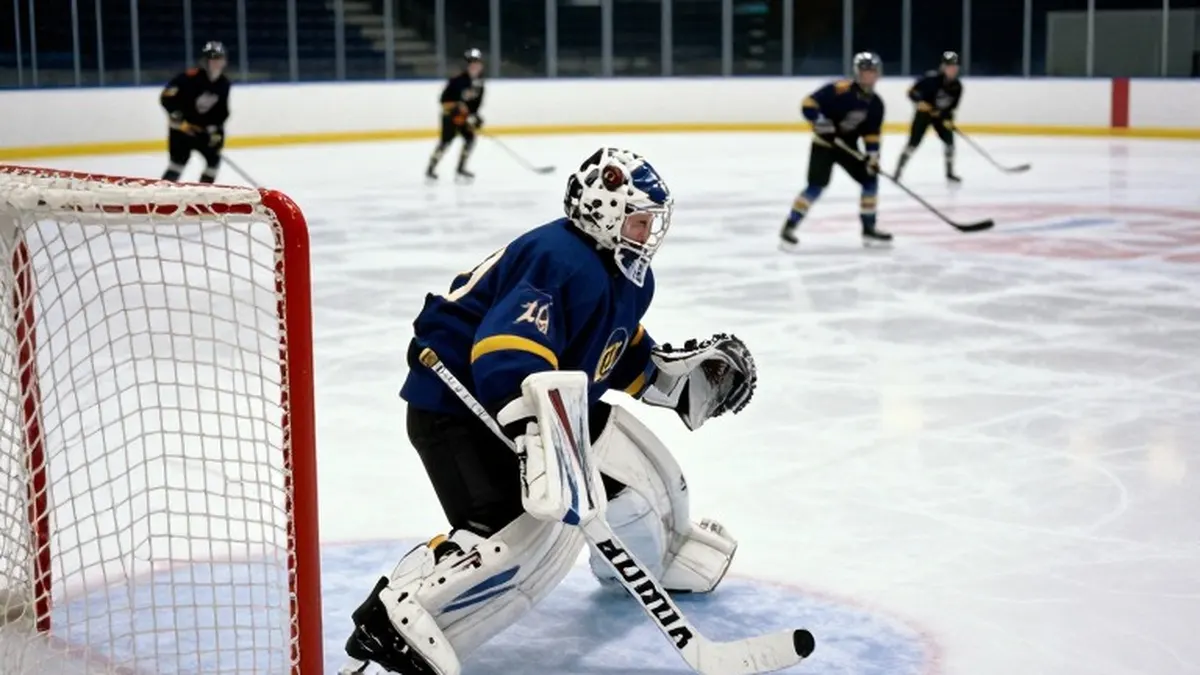
For years, National Hockey League front offices have relied on a mix of traditional statistics and newer metrics to evaluate goaltenders. Indicators such as save percentage, goals-against average, and expected goals against have become standard tools. However, a new approach is emerging that seeks to quantify the physical effort behind the net. With Hawk-Eye tracking technology installed in every NHL arena, teams are beginning to analyze the specific movements of goalies during games and practices to gain a deeper understanding of their workload.
The modern goaltending position has evolved significantly. Today's netminders are physically larger and face a faster, more lateral game than previous eras. This shift has increased the physical demands on their hips, knees, and ankles. Players like Dallas Stars goaltender Jake Oettinger, who stands 6-foot-6, are among the tallest and heaviest in league history. These athletes must perform complex, unnatural movements repeatedly, creating a unique set of challenges for their bodies over the course of a long season.
Defining what constitutes a movement remains a subject of debate among players and coaches. Some, like Casey DeSmith, consider any body shift a movement, while others like Jeremy Swayman define it as a full-body action. Brandon Bussi noted the difficulty in calculating these figures due to the variety of small actions like glides. Regardless of the definition, the cumulative effect of these actions is substantial. Oettinger estimates he performs up to 5,000 movements in a single game, including pre-game warmups and media timeouts.
The implementation of emergency backup goalies, or EBUGs, under the new collective bargaining agreement has already helped manage this strain. These backups allow teams to reduce ice time for primary goalies during morning skates and practices. Jeff Reese, the Stars' goalie coach, explained that this flexibility prevents fatigue-related bad habits. It allows primary goalies to maintain focus and proper technique rather than standing still when tired, which can lead to poor puck tracking.
The Carolina Hurricanes have highlighted the disconnect between shots faced and actual workload. As a team that leads the league in shot share, their goalies often face fewer shots but still endure significant physical activity. Paul Schonfelder, the Hurricanes' goalie coach, emphasized that a goalie's workload is a direct result of puck movement in their defensive zone, not just the number of pucks on target. This perspective supports the argument for tracking detailed movement data to better assess player fatigue.
John Frantzeskakis, the NHL's senior vice president for technical operations, stated that the league is moving beyond identifying where plays happen to understanding how they unfold. The current Hawk-Eye system tracks 29 identifiable points on each player, including the stick and puck. While the system currently captures up-downs and lateral movements, the league is working to track even finer details, such as eye direction and foot placement. This granular data aims to provide a complete picture of the physical demands placed on goaltenders.
The ultimate goal is to use this data to improve scouting, player development, and injury prevention. By turning subjective observations into hard data, teams can make more informed decisions about rest and usage. As the game continues to speed up, understanding the true cost of goaltending on the body will be essential for extending careers and maintaining peak performance.
Mikhail Yegorov, a prospect for the New Jersey Devils and a student at Boston University, has begun tracking his own metrics on a personal website. He advocates for focusing on lower body and skating movements, as these areas are most prone to strain. His work illustrates the growing interest among players in monitoring their physical output to ensure long-term health and consistency.
More News · National news · Report a business · Got a Story?